Media
shorts.
Stature V Slop: Building B2B Brand Trust in the Age of AI
AI is changing how B2B buyers find information. So how can brands make sure they’re both seen and trusted?
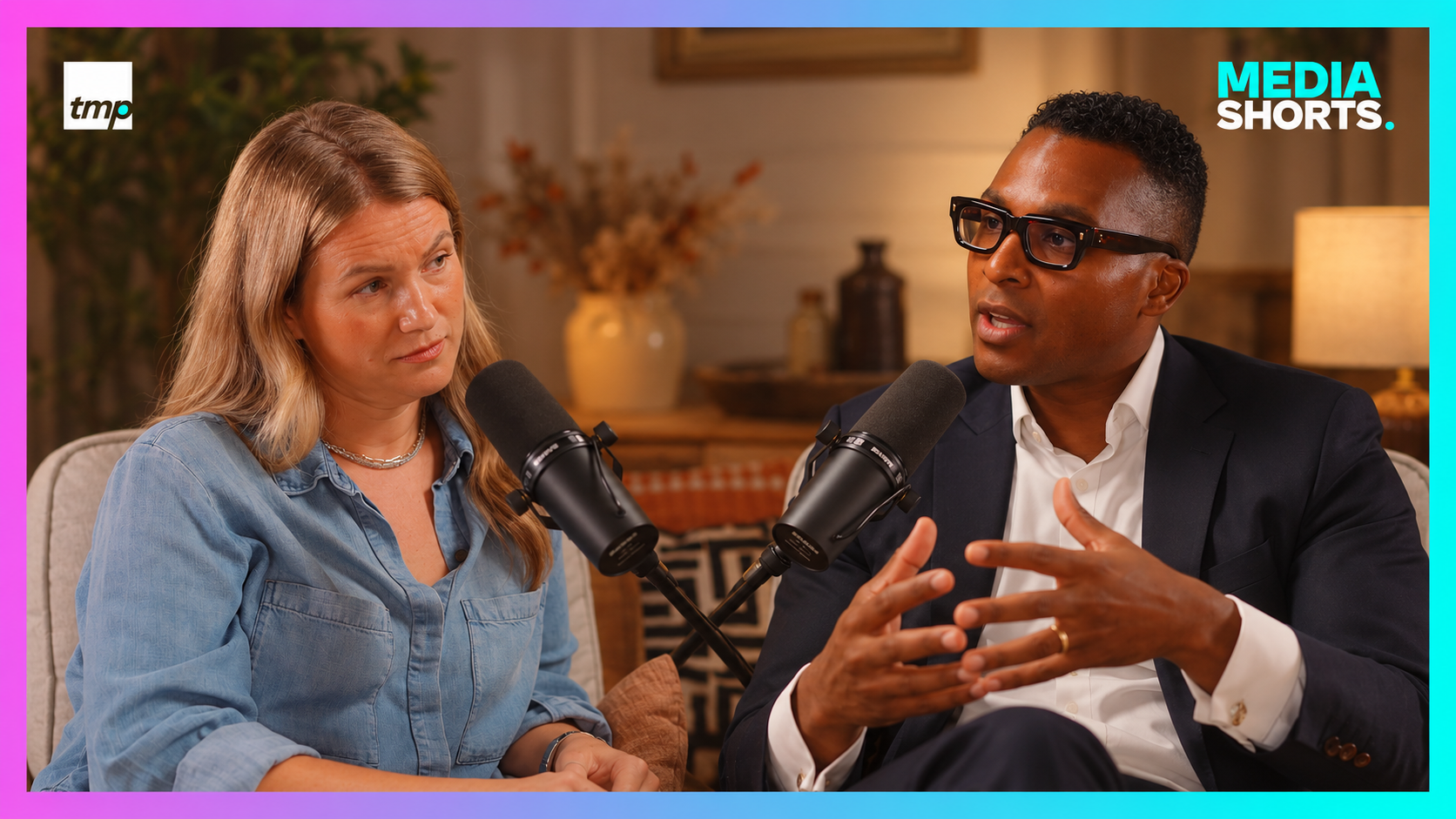
In this episode of tmp’s Media Shorts, Hannah Grap, VP of Brand Marketing at Zscaler, and Séverine Perrotto, Senior VP of Marketing & Communications EMEA & APAC at Fortinet, explore what changing buyer behaviour means for B2B marketing.
The conversation covers:
• Building trust and authenticity as AI-generated content grows
• The role of events and peer communities in buying decisions
• Improving brand visibility in AI search and answer engines
• Connecting brand investment to pipeline and business impact
Watch for practical perspectives on helping buyers discover your brand, trust your expertise and feel confident taking the next step.
-
Paul: Well, thank you very much for joining us today.
This is part of a series that we're calling Media Shorts, which is covering all kinds of aspects of buyer behaviour and changes in technology marketing in the world today.
This session in particular, I think takes a more strategic viewpoint on some of the changes that we're seeing and some of the topics that we're grappling with.
And we were just reflecting the, even in the month or so that we've been discussing the issues we'll be covering.
There have been a lot of changes.
It's a very fast-paced market.
So it's a great chance to take a step back and think about what's going on and what's working and maybe share some advice for the community.
And I'm delighted to be joined by Hannah and by Severine today.
And hopefully you could introduce yourselves and maybe Severine, if you went first.
Severine: Yes, sure, absolutely.
Thank you very much for giving me this opportunity to, to discuss.
So I'm Severine Perrotto and I'm the Senior Vice President of Marketing and Communications for EMEA and APAC at Fortinet.
Delighted to be here today.
Paul: Thanks, Severine and Hannah.
Hannah: Yes, thank you for this opportunity to to join this conversation.
I'm Hannah Grop and I'm the Vice President of Brand Marketing at Zscaler.
Severine: Trust is something I mean everybody would know, right?
It's something very, very difficult to earn.
And it takes years to to gain interest from, from customers and, and, and from from buyers.
It in my opinion, it's all about authenticity.
And with the raise of AI, it becomes more and more difficult to be authentic.
And again, buyers and customers are really seeing, you know, content being created by AI and that kills the trust.
So what that means is brands should focus also on transparency and share leverage more communities where users are exchanging and providing again, authentic content.
This is super important, always monitoring feedback from customers so that we always provide meaningful content to them.
Paul: Fantastic.
Yeah.
And, and I think that authenticity is very interesting and interesting to see the, the European Union, for example, taking a lead on regulating that authenticity and making sure that for example, if there's AI created content representing individuals that it's clearly factors having been AI created.
And I think that will be interesting to see how that plays through when people have to watermark and acknowledge the creation.
But yeah, Hannah, what's your perspective on.
Yeah, how, how large organizations can tackle this this challenge?
Hannah: Yeah, I think this is an opportunity to really lean into what differentiates us.
Why?
Why did the customers that have chosen us choose us and why do they continue to choose us?
But that's an opportunity for every single brand rather than, you know, try to impersonate or out message competitors like continue to lean into, you know, what is that core value proposition and that differentiator for us as a brand And continue to create those experiences, that content and that customer, you know, life cycle journey that is going to help customers be successful rather than, you know, trying to do the the out message and out AI other competitors and companies in the market.
So really focusing on that differentiator, but you know, I agree with with everything else that's been said as well.
Authenticity is is a critical part of that.
I think, I think events will become increasingly important and especially when you tie into the elements of community and connection and trying to find information that is, that's, that's true from those that have kind of walked the path already, rather than trying to weed your way through answers from LLMS or, you know, even online communities.
It's that this opportunity to, to test these hypotheses that you may have about, you know, what you might want to try in your business.
And I, I see there's a real value bringing people together to have those conversations rather than with your, you know, this increasing amount of content that's being created.
Paul: Do you see any differences between different types of events?
I ask because I think there's a, a Garner stat recently saying that organizations seem to be leaning more towards smaller, more intimate interactive experiences that might well include hospitality and sports marketing and leaning away from some of the very large tentpole multi country world tour style events.
But any any thoughts on things you're seeing Hannah?
Hannah: Yeah, I think it it needs to be a combination because they all will serve a different purpose and for a different, you know, different audiences, different, you know, folks that are different stages with with your company, you know, large events.
It's one thing to put on a large event, bring a lot of people together, but then be really thoughtful about how we're kind of intentionally engineering those networking moments and those moments to create community is still an important part of larger events or trade shows.
How are we helping to foster that connection that you can still get that experience that you get at those really small intimate events, but you know, for a much larger audience.
So I think there are elements of, you know, what brings people together to learn to connect you to have this a new amazing experience that is going to want them coming back year after year.
If it's a large about that, you know, our company is hosting or the part of a larger trade show industry event.
Each type of of event serves a different purpose.
Severine: And we need all type of events like large events and and smaller events.
And in the field, indeed, we are seeing definitely a growing audience, a growing participation to our events of all sizes.
We're seeing this at trade shows as well.
We see massive traffic on on the booth, a larger attendance, but also attending, you know, I would say brand LED events versus industry LED events because what people are looking for indeed is this peer-to-peer connection.
And this is where you can also continue to build the trust because customers, users can share their experiences and this is what they are after.
They want to hear from their peers not only what their challenge is, but also what is what has been their experience with the brand so far.
And this is actually the best place to do that.
It's also the best place to to showcase the quality of the solutions you're bringing to your customers.
So in the field in particular, yes, we are seeing an increasing interest for our events and all type of events, whether there would be a large conference, but also smaller intimate roundtables as well.
In, in the past few years, we had seen kind of almost a fatigue of attendance around those round tables.
But today we are seeing a fatigue on online activities in person intimate events are are catching up.
Definitely we're seeing a a great engagement from from customers and end users when it comes to sports marketing you, you mentioned indeed here as well.
I'm I'm seeing for a different purpose, like Anna mentioned earlier, but it's all around sharing emotions with your audience and that builds a such a strong connection while of course discussing business aspects.
Of course, it's not just about emotions and fun, but those are I I see this also interest growing
Paul: and it it's really interesting you describe those two almost different purposes.
There's the, the sports pieces you've just mentioned, which is, is almost like a brand level activity or it, it, it's creating familiarity.
It's, it's creating great relationships.
And then the other events, which might be more peer-to-peer where there's an opportunity to really test the quality of the solution or hear from the other customers.
And it ties a bit to something I think I've been seeing quite a bit in the market where the middle of the funnel is, is almost disappearing in a way.
You have the top of the funnel where there are those early engagements where you're building a sense of community.
You're you're making your first relationships.
And then the humans come back in at the bottom of the funnel where it's really important to have trust in the solution to hear from other customers.
The bit that's the middle of the funnel that used to be dominated by white papers and webinars and research, to me, that seems to be the piece that's being taken over by the AI engines.
What we used to have to do around long term nurture journeys are still important, but we're seeing a lot less engagement whereas I think that emphasis that at the top and bottom is working really well.
Severine: So, yeah, what you just said about advertising on community platforms is this is interesting because my opinion is that we we should use it with a pinch of salt, I may say, because that could damage trust because those community platforms are were built originally for peer-to-peer exchange, right user experience sharing, etcetera, independently from vendors.
If those platforms start becoming an advertising platform, I'm very worried that this is going to damage the trust of the users and and the buyers because then it's the perception is that it's not authentic.
With that being said, if as always, right advertising is is used in the right way, meaning providing the right content at the right time to the right person, right to the right user, then it becomes meaningful.
But we have to be very careful on not being too not hijacking the platforms with brand advertising.
What I see extremely important is that brands should contribute to those platforms, but once again, as much as possible with as much authenticity as possible to contribute to conversations and bring value to the users.
I think this is where trust can be built as well around, around the brands providing meaningful content and authentic content to the users by contributing to conversations.
Hannah: You know, I think ownership of community is, is interesting.
I for me, it's, it's wherever it's going to get the most attention Across my career, I've seen that community, you know, moderation and, and you know, can ownerships that came up across product or marketing or, you know, different teams as you know, where is it going to get that investment and not be an afterthought?
You know, even with your product LED communities, you know, a little bit of brand investment, you know, those teams and companies don't always have the largest budget.
So a little bit of brand support to help them put on a great event can go a really long way.
And it's not, you know, it's not selling, it's not, you know, overly pushing, pushing that that brand's narrative.
So I think you know injecting those that brand when it can be helpful and when you know several points where it can be authentic and not selling as I think that the balance we have to find with the community, both the external and then those that are maybe be a product or solution focused communities.
Regarding AEO, you know, it is definitely a high priority, I think across every single company.
And how are we showing up driving the visibility.
So then we can drive the conversion and we can the traffic and then ultimately the the conversion.
But really thinking through finding the information that's interesting to an audience, you know, helping to predict what they're going to put in as a prong to help us show up.
That is topic of conversation daily is, you know, how are we continuing to optimize that?
But doing it not just to show up in, in the LLMS, but doing it to show up authentically and consistently cohesively across every single channel.
It's, it's a bit of a forcing function to help really think through what type of content do our prospects need or our customers need that then will benefit us in a lot of other areas.
So it's, you know, getting back to the core and, and that content strategy that you know, has been lots of interesting conversations.
Paul: Have have you seen your own behavior changing at all like that?
There's a a lot of good statistics about decreasing use of Google.
Not that it's it's denting their dominance massively, yes, but maybe people turning more to to the AI tools for some faster answers on certain questions.
Do you do you find yourself using it in the same way, Hannah
Hannah: Yeah, my personal use has shifted.
If I want a quick answer, it's Google.
If I want like information and like a point of view, I do go to an LLM, but then I go to Reddit to validate is this real?
And then I do use in person events to try to connect with other marketers and say it like, how have you tackled this problem?
What are you is, you know, is what I saw you post on LinkedIn really how you're tackling this internally or tell me some additional details and using those events personally to, to that, you know, how we should consider moving forward and, and exploring and where we can learn what not to do as well.
That's the really interesting thing with in marketing right now is there are so many people trying different things to to stand out or use technology differently.
So to come together and and figure out what's working and and what hasn't worked as well can shortcut some process as well.
Severine: Yes.
So my behavior has somehow changed.
However, I remain very old school and for me, you know, the only true truth that you know, it's worthwhile is human interaction.
But I'm like, and I'm using multiple platforms to search for information for trends as well, always trying to be ahead of the curve.
That's our role as leaders always to stay, you know, to stay at the, the top of the of the curve.
But yes, I'm searching in different platforms for but it depends on what I'm searching for.
I would privilege some platforms to others depending on what I'm looking for.
But then peer-to-peer interaction, I would reach out to my peers to validate my, you know, my findings and also ask, you know, for help in in some main instances like you just mentioned.
Anna.
Absolutely.
So somehow my behaviour has changed, but I've always been very dubitative on, you know, information found on the Internet.
Anyway, I always want to have the proof in the pudding, if I may say.
So my decision making process for new initiatives or new investments is very thorough.
I mean, I pay, I spend a lot of time investigating and eventually the final cut will always be through, yeah, validation with my peers or or with third party independent authorities, business impact.
Hannah: Are we getting the stories in market that we want that are driving the perception for the brand, leaning into partnerships that we have, leading into customer stories that we have.
So you're really building that larger presence, capturing that larger share of voice, you know, that shows there's a direct impact on business when we have that that, you know, larger kind of share of what's happening in the market.
But you know, then really importantly working with those demand Gen.
partners and revenue marketing partners on how is that driving pipeline and where is that connection?
Because if we can connect brand to demand when you know, we've all been in marketing a long time, we know it swings kind of, you know, a couple of, you know, every 18 to 24 months.
When it there's I think a much better opportunity to maintain those brand investments when it's part of the entire customer and prospect journey, post sale journey versus just being seen as the air cover piece that we could easily cut and reinvest in other parts of the business.
Severine: I must say that for us the, the only metric that matters again is the pipeline generation, right?
And how much marketing is, is contributing to the, to the sales pipeline.
And then of course you go back the funnel and then find the source of, of this, of this impact.
So that's going to always be the metric I will be monitoring on a weekly basis I would say.
But then what I'm looking at is the different tactics that we are putting in place as part of the strategy, which tactic is contributing is accelerating at least, you know, accelerating the funnel and, and delivering results.
But right now, what I'm going to be monitoring very closely for both big geos will be the, you know, our, our visibility on, of course, the, the AI platforms.
And what is the sentiment that, you know, the perception of the brand, The sentiment that is that, you know, that is delivered.
And because we, we are putting a big focus here, right?
It's super important.
And like Anna said, it's our moment right now in terms of building, you know, the brand and making sure the perception is right.
And when I want to monitor is I want to make sure we still own the, the narrative.
This is very important.
Stay in control of the narrative and I think the one way of measuring it and again, you, you said that earlier, Paul, the, the tools are still quite immature, but I'm going to monitor those and find a way to measure that.
Am I, are we still owning the narrative?
Is the brand perception the right one?
Because again, yes, this is the foundation of everything that ultimately leads to pipeline generation and you know, through the conversions and etcetera.
Paul: So, well, I think it's an exciting time at the moment.
Thank you for taking some time out and discussing this.
It's it's as I said, very timely to step back and and look at the bigger picture.
So, yeah, very big thanks for for taking part.
Thank you, Hannah.
Thank you, Severine.
Hannah: Yeah, thank you.
Severine: Thank you very much.